A hostile environment for oral health
A spacecraft is a closed system, and that has consequences for the microbiome aboard it. Research has shown that the microbial environment on a space station mirrors that of its crew, shifting each time new members arrive. More worryingly, bacteria in space become more defensive — biofilms grow more persistent and robust, and microbes show greater resistance to antimicrobial agents. Viruses and bacteria that remain dormant in astronauts on Earth can suddenly reactivate in space.
Treating any resulting dental problems is far from simple. As Neefs explains, even a routine tooth extraction becomes a complex procedure in zero gravity: instruments float away and controlling bleeding is extremely difficult. These challenges were identified as far back as the Apollo missions.
Technology bridging the gap
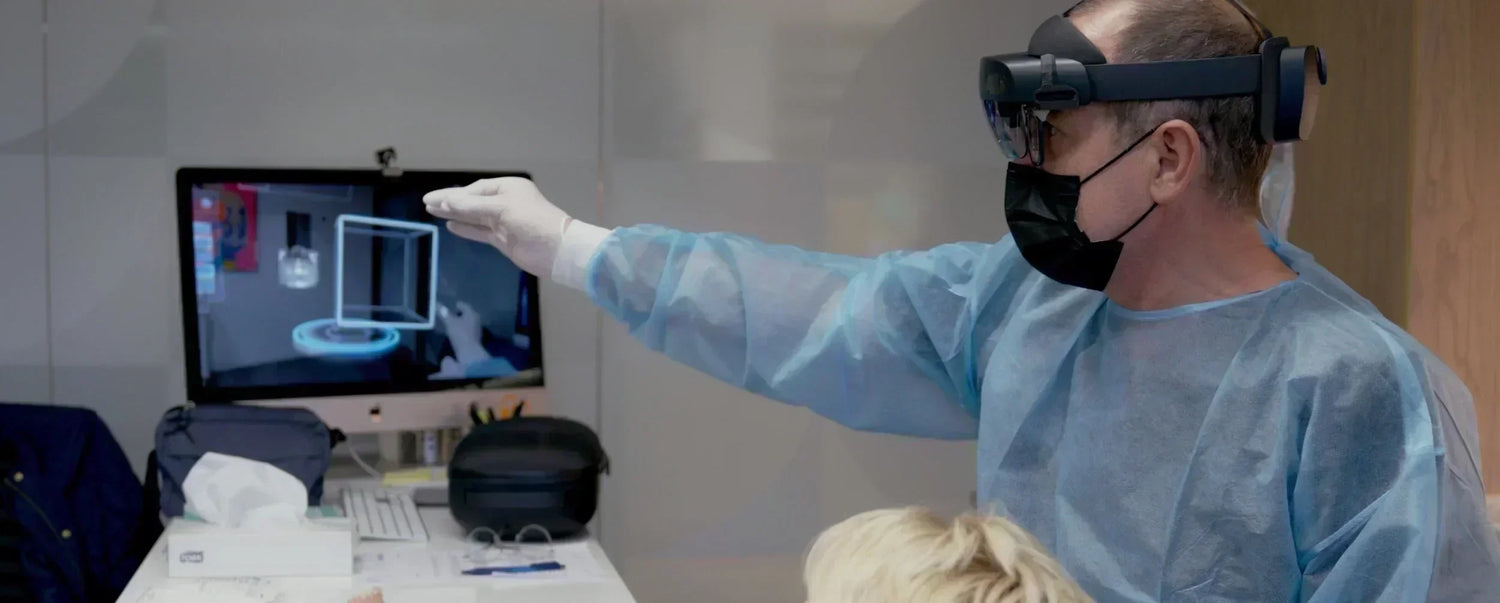
Remote support from Earth is being explored. Mixed reality technology is currently being tested aboard the International Space Station, allowing specialists to observe and assess situations remotely. Artificial intelligence connected to medical databases is also being developed as a kind of virtual physician. Still, Neefs is candid: "It's not like Star Trek, where you can summon a holographic doctor who immediately solves the problem. We are not there yet."
Better prevention through light
One of the most promising avenues is prevention; stopping problems before they start. In the interview, Neefs highlights Lumoral, a device developed by Finnish company Koite Health, that uses targeted light to eliminate harmful plaque bacteria, helping to prevent and treat both gingivitis and dental caries. In a zero-gravity environment where dental or gingival inflammation can pose a threat to astronauts health, a light-based oral care tool offers a compelling adjunct to traditional methods. Neefs notes that further research is still ongoing.
Salivary biomarkers and the future of monitoring
Beyond treatment, Neefs envisions a future where astronauts, and eventually all patients, monitor their own oral health through simple salivary tests. Biomarkers such as aMMP-8 can indicate active collagen breakdown in the mouth, and a full oral microbiome analysis could allow tailored probiotic or prebiotic interventions. If validated, this kind of screening could dramatically reduce the need for in-person dental visits — astronauts might go five years between check-ups rather than six months, with telemedicine enabling professionals to step in only when necessary.
The implications extend well beyond space. In regions facing dentist shortages, such remote monitoring systems could transform access to oral care.
The mouth as a gateway to the body
For Neefs, the greatest lesson from space research may be a philosophical one. Within NASA GeneLab's Analysis Working Groups, he leads the oral microbiome subgroup alongside roughly a thousand researchers spanning microbiology, cardiology, fertility and beyond. That interdisciplinary collaboration, he says, has created something rare: a genuine platform for connecting the dots between bodily systems.
"Dentistry has often been treated as a separate discipline," he notes. "Yet the mouth is the gateway to the body, and there are numerous links between oral health and systemic health. Dentistry deserves to regain its full and equal place within medicine."
Earth is the real spaceship
When asked whether he'd have liked to become an astronaut himself, Neefs offered a grounded response. He sees space exploration not as a path to colonising other planets, but as a catalyst for solving problems at home; in medicine, in ecology, and in how humanity treats itself.
"Earth itself is a spaceship," he said, "and we are very small compared to the vastness of space. We should take much better care of one another."
About Dirk Neefs
Dirk Neefs (Antwerp, 1963) qualified as a dentist in 1987 from the Vrije Universiteit Brussel and obtained a master's degree in surgical dentistry from the University of Liège in 1996. Since 1987 he has run his own practice in Antwerp, with a focus on implantology.
Neefs has become one of the leading figures in the emerging field of space dentistry. He leads an ESA (European Space Agency) Topical Team dedicated to developing dental guidelines for astronauts on long-duration space missions — work that will contribute to NASA's Gateway project, a planned lunar outpost serving as a launch pad for missions to the Moon, Mars and beyond. The team brings together international experts across disciplines including microbiology, nutrition, engineering and dental specialties, with a shared goal of ensuring astronauts can maintain optimal oral health over missions lasting five years or more.
His journey into space dentistry began unexpectedly: a TED talk he gave in Antwerp in 2018 on the importance of oral health led to a chance conversation with a Belgian nuclear biologist working at ESA, which sparked a collaboration that has since grown into a comprehensive research programme. Since 2024, Neefs has also led the Oral Microbiome subgroup of the Analysis Working Groups of NASA GeneLab, where approximately one thousand researchers collaborate across fields ranging from microbiology and cardiology to fertility and dentistry.
He is a member of the International Team for Implantology (ITI), the Aerospace Medical Association, and the International Association of Aerospace Dentistry.
References:
“Tandarts Dirk Neefs over mondzorg in de ruimte: ‘Een extractie doen is niet makkelijk als er geen zwaartekracht is’.” Dental Tribune Netherlands, Editie 1, January 2026.


Leave a comment
This site is protected by hCaptcha and the hCaptcha Privacy Policy and Terms of Service apply.